Leaks
Seven signs of a slab leak in an Elgin home
Slab leaks are quiet for a long time and then expensive all at once. These are the signs homeowners here actually notice first, in the order we find them to be reliable.
· 5 min read · Alexander Plumbing and Sewer
The short answer
The short answer
The most reliable indicator is the water meter: shut every fixture off, watch the meter's low-flow dial for fifteen minutes, and if it moves you have a leak somewhere in the system. A warm patch on a tile floor, an unexplained bill increase, and the sound of running water in a quiet house are the next most reliable.
Why this is an Elgin problem
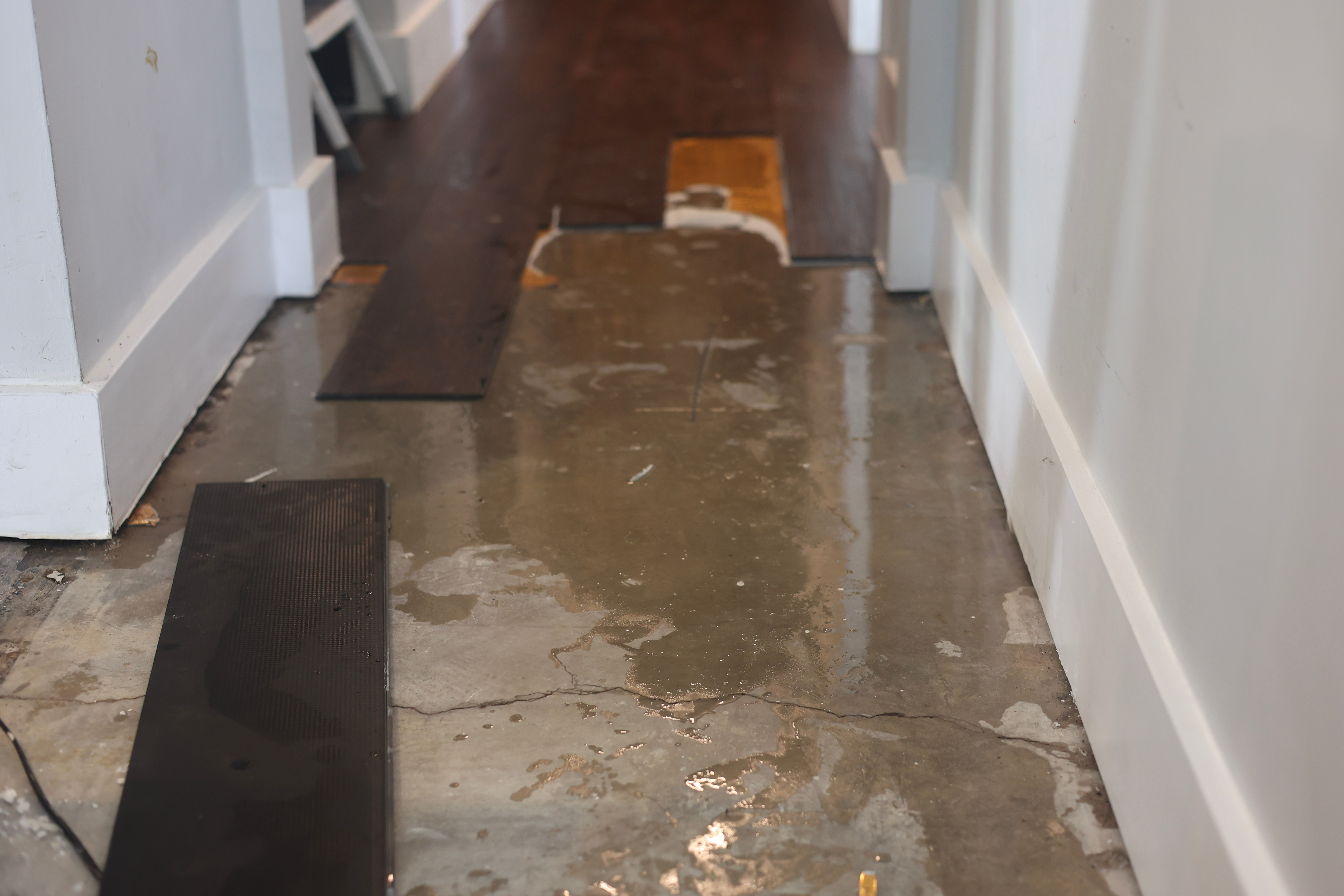
Homes here are overwhelmingly built on concrete slab rather than over a crawlspace, and in the tracts that went up from the 1950s through the 1970s the copper supply lines run inside or beneath that slab. When a pinhole opens, there is no basement for the water to show up in — it goes into the ground, or it works its way up through the concrete.
That is the whole difficulty. A leak under a sink announces itself in a day. A leak under a slab can run for months before anything visible happens.
The seven signs, most reliable first
1. The meter moves with everything off. Near-definitive. Find your meter at the street, close every faucet and valve, do not run the irrigation, and watch the small triangular or gear-shaped low-flow indicator. Movement means water is leaving the system somewhere.
2. A water bill that jumped without a reason. Compare against the same month last year, not last month — irrigation seasonality will mislead you otherwise.
3. A warm spot on the floor. Specific to hot-water-side leaks and very telling when you feel it. Tile shows it most clearly; carpet hides it.
4. Running water you can hear in a silent house. Late at night, with everything off. A faint continuous hiss or trickle with no source.
5. Low water pressure that came on gradually. On its own this is more often aging galvanized pipe than a slab leak, but combined with any of the above it points the same direction.
6. Cracks appearing in flooring or drywall. Water under a slab moves soil. Moving soil moves the slab. This is a late sign.
7. A musty smell or unexplained damp carpet edge. Also late — by the time moisture is surfacing it has been running a while.
What we do when you call
We confirm there is a leak before we go looking for it, using the meter and a pressure test to isolate hot side from cold side. That step matters: it prevents an expensive search for something that turns out to be an irrigation valve.
Then it is acoustic listening equipment and thermal imaging to narrow the location to within a foot or so before anything gets opened. The point of good leak detection is to make the repair small.
Repair options depend on the pipe's age and history. A single pinhole in otherwise healthy copper gets a spot repair. A line that has already leaked twice gets rerouted overhead instead, because a third pinhole is coming. Our slab leak repair page lays out how we choose.
What to do tonight if you suspect one
Do the meter test. It takes fifteen minutes, costs nothing, and it is the same first step we would take. If the dial moves, shut the main off at the street until someone can look at it — a slab leak does not get better overnight, and the soil damage is cumulative.
If it does not move, you have ruled out the expensive possibility, and the warm floor is probably a sunlit patch or a heating duct.
Does homeowners insurance cover a slab leak?
Policies commonly cover the resulting water damage and the cost of accessing the pipe, but not the pipe repair itself. Read your specific policy — coverage varies more than people expect, and the access provision is the one worth checking.
How long can a slab leak run before it causes damage?
Months, sometimes longer. The damage curve is not linear — it is slow while the water is dispersing into soil, then fast once it starts undermining the slab or surfacing through flooring.
Is repiping overhead better than repairing under the slab?
It depends on the history. First leak in a home under about forty years old, spot repair is usually right. Second leak in the same system, or an older home with thin-wall copper, and rerouting is the better economics — you stop paying for the same discovery process over and over.
Keep reading
More from the blog.
Is a water softener worth it here?
For most Elgin houses, yes — but not for the reasons the door-to-door salesperson gives. The plumbing savings are real; the skin-and-hair pitch is not why it pays for itself.
Read the postDoes liquid drain cleaner actually work?
Short answer: sometimes, on hair and soap in a bathroom sink. On a kitchen line, a main line, or anything you have poured it into twice already, it is doing more harm than the clog.
Read the postAll plumbing services
What we do, what it costs, and how each visit actually goes.
Browse servicesA plumbing problem should
not become a renovation.
If it is safe, close the nearest shutoff valve, move belongings away from water, and tell us exactly what you see.